Learn how optimized nickel superalloys and refractory metals are delivering improved strength, thermal stability, creep resistance, and oxidation performance for hypersonic vehicles, propulsion systems, and next-generation space platforms.

Applications
Applications for advanced additive manufacturing materials
My name is Jacob Rindler and today you’re part of the webinar series put on by ADDMAN. And the topic is Better Than Wrought – how optimized AM material properties are enabling hypersonic and spaceflight. And you know what I want you to take away from from today is that the right material choices are not about kind of meeting the thresholds of set by traditional methods, but rather really when you pick the right materials for additive manufacturing, you should get an optimized set of material properties that can maybe exceed what you can achieve with traditional manufacturing methods. So again, my name is Jacob Rindler. I’m the Director of Materials Manufacturing Technology at ADDMAN and predominantly support our metal additive manufacturing group, Castheon.
So with that, we’ll get started. So real quick we’ll do a company overview so you can find out, you know, if you don’t already know who ADDMAN is and, and the companies that make up the ADDMAN Group and, and sort of what they do as well. So but most importantly, behind that is our vision and mission, which is, you know, really to power better tomorrow using additive solutions. And what we really like to say is we’re a manufacturing solutions provider that’s enabled by additive manufacturing.
And that means a lot of things really, you know, all the way up front with engineering and R&D services when when ideas and challenges are really just starting to be formed all the way through being your trusted manufacturing partner, through the prototype and full on production lifecycle of a program, you know, with our metal and polymer additive manufacturing business and also sort of our more established, maybe even higher throughput manufacturing divisions focused on CNC subtractive manufacturing and also plastic injection molding. So where are we at?
So we really stretch from coast to coast. So you know, starting from Baltimore or Glen Burnie, Maryland, we have a machining production center there that has multiple CNC machines, does very high throughput, and does a lot of aluminum machining. Our location in Rochester, New York, which is home of all of our polymer injection molding. They also have a full mold making tool, mold making shop there as well supported, as well as supporting precision machining of complex components as well as we even do some manufacturing of things like coils for metal coils for solenoid production.
We recently are the newest addition to the team is our metal manufacturing production center that was formerly Keselowski Additive Manufacturing that’s in Statesville or the Charlotte area. Very excited to have them join the team. Great team and excited to unlock the future together.
We have our corporate headquarters, which opened just over a year or a little over a year ago in Fort Myers, Florida, which has some of our R&D as well as corporate functions. And then we have a location in Wright City, Missouri that does, you know, precision machines of really large, complex aerostructures, especially from hard metals like titanium.
We also have a location in Rochester, Minnesota, well known for supporting the national security mission, Honeywell FMT, as well as doing a lot of different exotic materials, as well as some friction stirring assembly for cold plates.
And then finally on the west coast, we have Castheon and Dinsmore. So Castheon being our metal metal, additive manufacturing and hypersonic focused development center, as well as doing a lot of our serial production for refractory materials. And then also down in Irvine, we have our polymer 3D printing specialist at Dinsmore there.
So again, coast to coast, over 350,000ft² of footprint with room to keep growing, as well as over 650 employees, many of them being engineers. And so we can really take again, work with you up front on developing the requirements and the engineering to manufacture something through the life of a program, and then also go ahead and execute on that with a range of certifications ranging from from ITAR 9100 all the way through things like ISO 14,001 and 1345 as well with with others coming.
So looking at our metal AM capabilities, we’re a machine agnostic metal company. So really we have a number of different platforms. Some of them do things really well and some of them, you know, specialized on, you know, more. So production, large scale production machines, highly productive with many lasers all the way through smaller really R&D focused machines as well.
And, and kind of everything in between. And we really have done that strategically as sort of supporting the technology development, especially in laser powder bed fusion of, you know, really working with many OEMs to push the boundaries of what’s possible.
And of course, going into the heart of today’s discussion is all the materials that we print. So you’ll see many on this list that you know are familiar and, you know, some maybe that are a little bit less familiar. And we’ll talk about why maybe some of them have more benefits to those who want to make metal metal additively manufactured parts. And, you know, sometimes we say that the printings, the easy part and really it’s the post-processing. And so that is sometimes the challenging part of the additive production process.
And so we’re very lucky to have, you know, experts for CNC machining across the company, across the coast, both coasts and everywhere in the middle to be able to, you know, have so much capacity to CNC machine, post post-process machine, our metal additive manufactured parts. So you can see over 100 machining centers across the company. And so what do we do? How does that impact the industry? So you know, you can see some of the cool stuff that we’re able to share.
Everything ranging from, you know, products on the stealth products on the F-35 that are consumables, such as those low panels that help keep that system stealthy all the way through, you know, our serial production. additive parts on that are space thrusters for, you know, rapid propulsion chemical propulsion in space made from C103. And then you can see there on the right hand side, you know, large aerospace structures and, you know, all the way through complex machines of those. So whether we’re adding inserts and, you know, bolts and fasteners or, you know, more complex mechanical assembly with systems and you’re seeing down there, basically a splice cutter for an aerospace platform that is a pretty complex piece of assembled hardware. And in the bottom left, you know, one of the things that we’ll be talking about is, we’re fracturing printed refractory materials and see some representative components there, ranging from power generation all the way through, again, space propulsion and our hypersonic products as well. So survivable, scalable, affordable TPS systems for the front end of these hypervelocity applications, all enabled by, you know, especially in the metal additive manufacturing enabled by advanced material choices.
So getting into the meat of our presentation and the webinar today and hopefully discussion time questions after this. But you know, with raw materials, the majority or with additive materials, really kind of where we started is using more traditional materials that are, you know, widely available to be atomized and, you know, are wide, obviously have a large user base within the aerospace community.
But, you know, those materials were designed for specific manufacturing processes. Oftentimes they were the ones that are most successful, are ones that, you know, have really good properties in their raw form or plate form, even cast form. But then also, you know, can be welded because, you know, if you can’t, if you can make something but you can’t assemble it into the final shape or repair it, you know, that often creates some challenges as well. So we’ve kind of seen this, you know, maybe group of 5 or 6 alloys, you know, nickel, 718, 625, Grade 5 titanium, Ti6Al4v, Aluminum 10-silicon magnesium, maybe 316L stainless steel that sort of have this huge presence in the market.
But not saying they’re great. They’re not great alloys. But if we really want to talk about getting the most performance out of our additive manufacturing process, you know, we can start making some more judicious material choices that really suit the manufacturing process to the strengthening mechanisms that we’re hoping to achieve to get the most optimized set of material properties, which is really kind of needed for these, you know, ultra, you know, high temperature applications, especially in hypersonic, where we’re seeing, you know, the systems, the design of the systems themselves is now limited by the materials that we have available in our toolbox.
So hopefully what you’ll get away from today’s discussion is a view on, or at least how we at Castheon and ADDMAN view that if you pick the right materials with the right manufacturing process, it’s not about achieving this set of properties, you know, that have been historically there, but really, you know, potentially exceeding those. So yeah, let’s get into the meat of it. So when we look at sort of, you know, cast iron and, and, you know, now ADDMAN’s approach to metal additive manufacturing is, you know, really material centric and but but maybe not in the same way that, you know, you might see in maybe some papers or case studies out there how we really kind of differentiate ourselves in this material centric approach is when you look at a manufacturing challenge, you know, going back to, hey, what are the material properties that are the most important for that application?
And then, you know, from there you start to understand, okay. What sort of strengthening mechanisms and other sort of intrinsic properties are this material going to need. And from there you can back out really what is the right chemistry? What should this material have in it from a primary elemental component and really looking at it from us, if we’re talking about a specification, what is the right range to get the right microstructure and strengthen what we want to have this alloy.
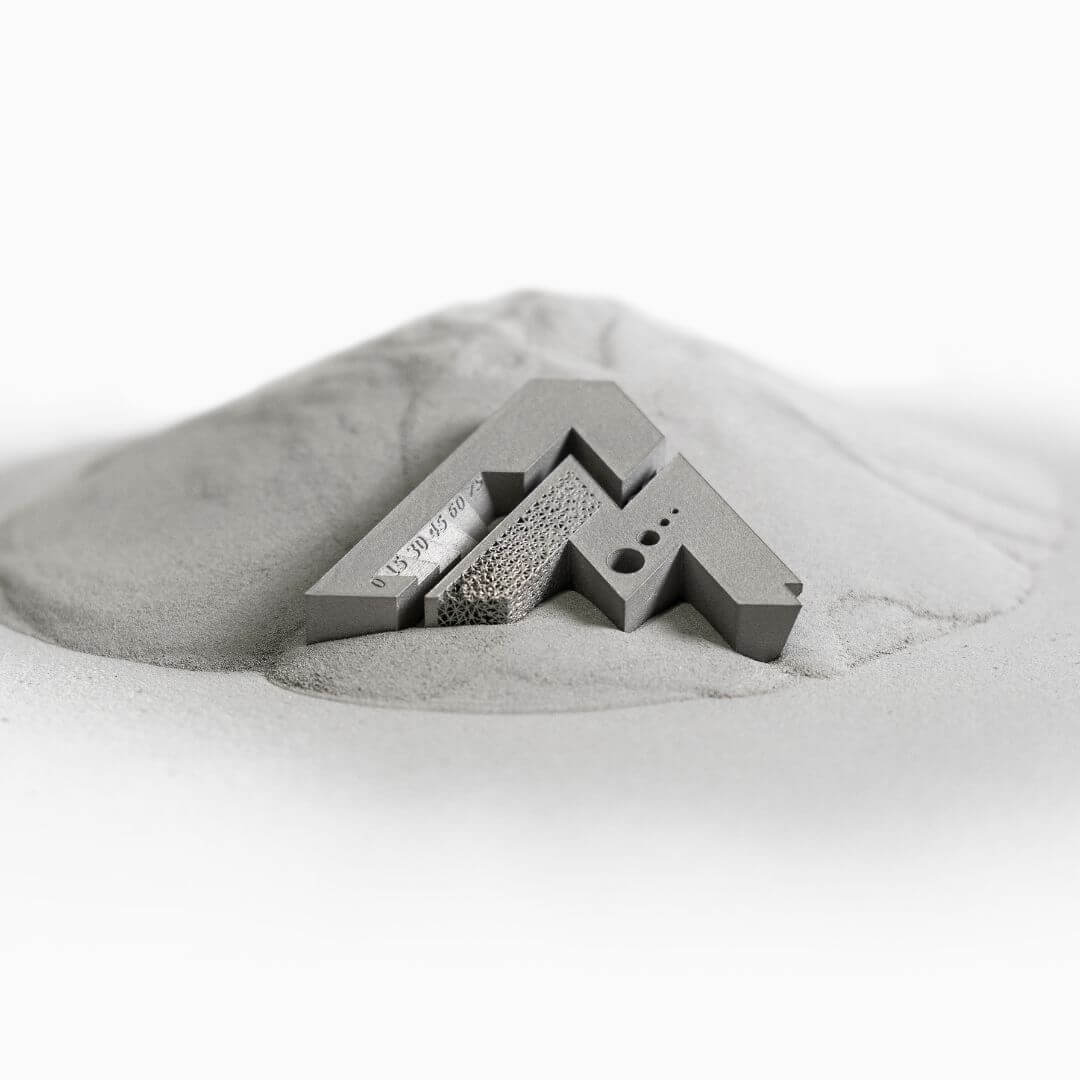
And so our founder Youping Gao developed the Gao Block as sort of this process and material, not only quality control artifacts but also development artifacts. And you can see that there in the bottom left hand of the screen, the Gao Block. You see this out there in industry almost, you know, it is quite common as not only a quality artifact, but again, sort of that development artifact as well. And we continue to use this on all of our build plates that we print at Castheon and ADDMAN. And so once we have the chemistry that we think is going to develop, is going to result in the right microstructure and properties that we want it, then it’s really about on a weld by weld basis, we’re looking to get the right microstructure formation.
And that’s, you know, related to the cooling rate. So that’s the aspect of the weld pool of the processing parameters that we’re getting the right sort of ratio of, of velocity, which is going to control the solidification as well as the temperature gradients along with the power itself of the laser. And that’s what we’re looking to get the right microstructure. And second, maybe secondary phase formation as well. And then finally, you know where oftentimes you’ll see sort of these process maps of the first thing being developed is sort of a laser speed versus power sort of curve where we’re looking for optimizing density. That’s really the last thing that we really optimize for, because at that point, really it’s a geometric problem. But, you know, if you want to get the best material properties, you got to start with the best microstructure that you can get from the manufacturing process.
And then also keep in mind some of these alloys are heat treatable. And so, you know, we also have to have an understanding of that. And some of the alloys that we work with, you know, work really well with sort of just a stress relief only heat treatment and others ones, you know, we do sort of age hardening type heat treatments as well. So that’s really when we talk about, you know, getting or beating wrought properties. We kind of have the standard sort of, you know, playbook or way we view the problem that we bring to a diverse set of manufacturing challenges.
And sometimes it’s, you know, high temperature performance and sometimes it’s creep performance. And, you know, sometimes it’s special properties like, you know, magnetism. So it kind of varies. But you kind of can kind of come back to the same type of approach. So now let’s get into some specific use cases here. So you know you see here advancing super alloy manufacturing. So you know Inconel 718 Inconel 625 you know, huge levels of adoption in the additive manufacturing world. You know, I’d say my guess is probably there’s more Inconel 718 printed than any other alloy.
Definitely any other nickel super based alloy. But, you know, there are certain applications where it makes a lot of sense. The economies of scale has made it for, you know, a very affordable, you know, pricing for the powder and y wide amounts of, of availability. But when we start looking at, you know, high temperature applications, because Inconel 718 is a gamma double prime strengthened alloy, it’s susceptible to basically kind of this cliff as where the properties fall off as a function of increasing temperature, because those strengthening phases are going to dissolve into back into solution at, say like around 1800 degrees Fahrenheit. You know, the same thing for Inconel 625, is not a precipitation strength, but its solid solution strengthened. But you know, it’s going to have some issues, especially around Laves phase formation.
And, you know, there’s a lot of molybdenum in there that, you know, isn’t as necessarily effective as a solid solution strength at higher temperatures. And you know, really where these alloys have, you know, seen their a bunch of use really is around because they were they were well suited to having, you know, solidification temperature ranges that are suitable to allow them be gas, tungsten arc weldable, didn’t really have the weldability challenges of maybe some higher strength alloys such as, you know, like Mar M247, or, you know, something like the Waspaloys where, you know, you kind of run into weld ability issues and reheat cracking issues from, you know, game of prime formation and things like that. And so when we had our customers, you know, we’re looking for nickel superalloys that, you know, had better performance really is driven by the hypersonic and the launch community. And so, you know, when we looked at Haynes 230, there was a lot to like there.
One from an ease of post-processing. It is solid solution strengthened and then from high temperature performance because it’s primarily strengthened by tungsten carbines, tungsten carbides are inherently very thermally stable. And what the challenge of maybe the. The material from a welded ability standpoint was really able to be addressed by picking – when we talk about using the right chemistry – picking the right band of chemistry to get an alloy in the right processing window, to get an alloy that doesn’t have weld ability issues. But when we look at the microstructure now of the printed material over the wrought material, this is one of those instances where, you know, if you would have just if you look in the material handbook and you say, hey, what is the pure properties of Haynes 230 and, you know, the regular wrought microstructure, you kind of see, you know, just one story.
But with additive manufacturing, we’ve – in laser powder fusion especially, we’ve we’ve really been able to reinvent this alloy because we’re getting we picked the right chemistry. We get the right strength and mechanism. So what you’re seeing here is we compare between the right and the left, the right being the raw and the left B and the atom material. We’re able to get these tungsten carbides forming coherently within grains at very fine length scales, but also along the grain boundaries. But we have really refined grain boundaries, as is typical of a rapid solidification process.
And so how that manifests itself in material properties. I’ll show you here on the next slide. But here in two slides here I’m going to go talk a little bit more about the microstructure. So if you look in literature you know some folks have worked on Haynes 230. And from a robustness standpoint it can have hot cracking issues and micro fissuring, which of course would degrade your properties quite a bit and is unacceptable. But when you pick the right chemistry, you actually are able to mitigate these issues in the right material properties.
As you can see here on the right hand side, looking in the middle there, you can see the Haynes 230 sort of this, you know, a nice three dimensional representation of the microstructure in the various orientations. And you can see these large tungsten carbide forming at the grain boundaries, which is going to limit your suitability at high temperatures over the length, as it’s especially in creep performance as it’s subjected to constant load. And so really what we’re looking for here is, is this, this dense as well as optimized microstructure that with the tungsten carbide forming after just a short heat treatment, again, coherently within the grains.
And you kind of see over here the difference in chemistry. So whereas Inconel 625, a lot of molybdenum in there molybdenum is going to form these, these carbides, these strengthened carbides as well as be a solid solution. But, you know, we can see here that we have about 14, 8% tungsten. That’s going to one act as a solid solution strengthener. It’s you know, and then also form those carbides. So when we look at the material properties themselves and you can kind of see here on the left hand side is the spec required minimum for Haynes 230 as well as the typical values. And we can kind of see here that ultimate tensile strength yields strength. It’ll be present along.
So, you know, highly ductile alloy has pretty good strength in its wrought form. It has been used a lot for combustor type applications in the turbine engine community for years. But when we go to the as built or additive manufactured version, we can see here the AM as built the a of stress leaved and the AM hipped all across the board we’re able still retain most of our ductility while, you know, getting much higher yield strengths as well as ultimate tensile strength and why we see a little bit of degradation property from. So from the stress relief, we know we get a little bit of relaxation of residual stresses which can.
And these were taken in the Z direction, which can, you know, reduce your yield strength a little bit. But also the ultimate intentional strength slightly increases because we are getting a higher fraction of those tungsten carbides precipitating out. And then during the shipping process at the high temperature. Plus a combination of high pressure is something that, you know, causes start to recrystallize. So we get a little bit of that. The benefit of having that reduced grain size starts to go away. And so we see a side degradation properties but a slight uptick in along. But what has us really excited about this is we retain those benefits in our.
Strength as well as elongation all the way out to 1800 degrees Fahrenheit. Out here you can see the comparison between the wrought and additive manufactured version at 1400 here and 1800 there on the far right hand side, again, still remaining highly ductile. But we’re getting these increases in strength over the raw alloys. So if you were to look in, say, the material handbook or like MDS as a designer and, you know, check. Oh well, hey, if I just look for wrought properties, yeah, maybe this alloy would want me to I would you know, want to pick something else.
But when we look at this, this is where we have to do these investigations and pick the right material and process combination to, you know, solve those kinds of difficult manufacturing and design challenges for these kinds of next generation systems. And so what I’ve plotted across here too, just for everybody’s reference, is where the stars are. Is that data that, you know, is in the open source for additively manufactured Inconel 625. And so you can see, you know, when we look at in comparison there are clear benefits to you know, it’s saying like taking an Inconel 625 application and pursuing Haynes 230 because at the end of the day, higher strengths at temperatures, you know, means ultimately lighter parts. You can see here on the right hand side, you know, some potential applications of Haynes 230 that you can have in the launch community.
So switching gears a little bit, we’ve been talking about some of the benefits for nickel based superalloys and picking the right alloy. You know, the same can be said for refractory alloys. So Niobium C103 is the most common aerospace based alloy, you know, it has a long flight pedigree. You know, even going back to the Apollo lunar lander. And this is another material where because of the unique microstructure and secondary phase formation from the laser powder bed fusion process, we see some real clear benefits for the printing of this alloy. And so you can see here on the left hand side kind of the traditional wrought annealed structure. So you know, kind of typical, you know, cellular type grains for. Morphology.
And then, you know, when we look at the printed version, we can kind of see very clearly in the printed as well as annealed that we still retain all of this weld macro structure, which we’ll get into why that’s important here in a little bit. But you can see clearly, we kind of have that little bit of a propensity for grain growth across the layers and see clearly the weld tracks here. So we’re talking about weld pools. That’s 175 to 225 micron ish wide. And about the same in depth. And you know, if you’re not as familiar with Niobium C103 you can kind of see the alloy composition here. So about 10% hafnium at 1% titanium. And whereas you know the nickel super base alloys, you know, we’re talking about melting temperatures or you know, the 3000, we’re talking melting temperatures for niobium based alloys in the 4000 degree plus type Fahrenheit, while also still having a density that’s that’s pretty similar to those of other nickel super nickel based superalloys.
So not a huge weight debit from something like this. So getting into why this material benefits from the anime factoring process and why we can actually beat the wrought form of this material. It really comes down to the printing process. And you see here we’ll talk first about the microstructure. So you know again laser powder bed fusion. We’re talking, you know, over a kilometer, a second of laser travel speed and you know, temperature gradients that can be or cooling rate here, that can be in like the 10,000 degree per second realm. And so we get a microstructure that is going to be very refined resulting from that rapid solidification.
And then we also get, you know, formation of these very fine secondary phases such as hafnium carbides and hafnium oxides at very fine length scales. We’re talking, you know, tens, hundreds of nanometers, both at the grain boundaries as well as you can see here in the lower left hand corner, in this small image dispersed throughout the grains. And the grains themselves are in the order of tens of microns in size and either orientation. And so we get a refined microstructure, you know, so we’re going to get hull pet strengthening as well as sort of this disperse strengthening effect that we wouldn’t typically expect to see in the wrought, in the wrought counterpart. And so why is that important? Why do we see higher temperature strength and better creep performance?
So that really comes down to those secondary phases. And so you can see here when we look at the printed material versus the bar stock material, you kind of see the difference in kind of the weld macro structure view. The grains are too refined to really clearly pick out. And at this magnification versus we can kind of see individual grains here in this view. And then if we expose this material at 2963 now 3000°F for two hours, we can see the difference. This has an effect on the different types of material. So in the AM version we can still see that retained weld macro structure that we get from the process. And so you know this material is going to be very thermally stable. It is going to have better properties and properties that don’t degrade at higher temperatures through the service life of the of the of the component versus the raw material.
You can see sort of an explosive grain growth. And that’s going to let you know that, hey, when we’re going we’re going, you know, now get the strength benefits of having a refined microstructure is going to, you know, go down and then the material properties is only changing as we sort of get this constant growth and elimination of grains in sort of the raw material. And that’s really related back to those hafnium carbides and oxides forming very fine length scales during the printing process itself. And so you can see when we talk about strength and all the way at 2000 and 2400 degrees F, you know, out to out of 2400 degrees at Fahrenheit, you know, we’re seeing an almost double in the ultimate tensile strength and even improvements in the yield strength while still retaining ductility, which which tells us, hey, this is a really good candidate material for, you know, that’s going outperform its wrought counterpart. And we’ve demonstrated that now.
And we have many customers now designing off of these new additive manufactured properties that we’re developing together in collaboration rather than going back to the traditional wrought material values that they might find in, say, like a, you know, in on like a data sheet for this, this material made vacuum 30, 40 years. And, you know, it’s not just tensile strength or elevated temperature, tensile strength. There’s other properties that benefit from the laser powder bed fusion process as well. So first we’ll talk, you know, kind of show maybe a little bit more comparison at a suite of temperatures here. So and talk a little bit about some other alloys to that in the niobium based, niobium based system that benefit from the additive manufactured process too.
So going from the top to bottom on the key here we have, the blue diamonds are the wrought material tested in vacuum. So the ultimate tensile strength and yield strength. And then also the AM C103 material that was also tested in vacuum. So those are the red diamonds. We have some AM material in the red squares that was tested in atmosphere but was coated, and then another alloy which is WC 3009, which is another niobium based alloy that has upwards of 30% half DM in it that will you can see here of where it gets charted out of a, you know, even higher strength alloy that is very printable and then a material that we’re just starting to develop or putting or really, getting put into use is our Castheon Super C103 material with more data forthcoming.
So you can see, you know, kind of across the board, the even the, the material tested and air, which is traditionally, you know, this material oxidizes readily and rapidly degrades at high temperatures and, and atmospheric environments. You can see even at that temperature, high temperature, it’s beating the traditional wrought material when tested in air and tested in vacuum. We’re seeing you know, we’re seeing, you know, much higher performance kind of as we showed in the last slide. And then, you know, WC 3009 with the added hafnium content, we kind of see that it’s a higher performance alloy even at much higher temperatures. But you know, what’s important out here is even with some of our applications going up to 3000 degrees F, we’re still seeing measurable benefits to the additive manufacturing material, which is really exciting. So I talked about not just ultimate or elevated temperature tensile strength but also creep performance.
So you can see here the comparison between the wrought material test set at 800°F and argon environment. The wrought material was, you know, annealed as was the AM material at – 2600°F ASC at that, whereas this specimen failed at about 2% creep after 15 hours, we saw no measurable creep at 15 hours, or even out to 25 hours. And so while increasing the load on the creep frame itself and you see the material, the AM material didn’t fail until almost out of 14% creep with almost double the load. And so, you know, that’s really exciting for some of these long life type components.
You know, we will talk about reusable hypersonic vehicles someday. They’re their TPS systems you know, aren’t if we go to like a blade system, you know, we’ll never get the reusability that we want. And so this is really exciting to see these materials not only be able to survive, say, you know, a single use type application, but also, you know, this gives us high confidence that in a reusable type application, this material could also really perform quite well too. So diving deeper into the microstructure and the grain morphology itself, you can kind of see I talked about the cellular type grain structure, pretty planar type grain boundaries versus the laser powder bed fusion process.
We can see these really tortuous type grain boundaries forming really refined grain structures. And this is going to have benefits when we start talking about oxidation resistance. So if we look at the, you know, one of the downfalls or one of the challenges of refractories, especially niobium bases alloys, is they readily oxidize. And it just so happens that the niobium pentoxide that can form has a melting temperature quite a bit less than the base material itself all the way down here, 27 degrees F 2700 Fahrenheit.
When, you know, many of our applications are potentially at 3000 degrees F or more. And so when we look at the grain boundaries and why we’re seeing a better oxidation resistance, I kind of equate it to a racetrack. So when we look at, you know, like say like a drag strip with these straight planar grain boundaries, because oxygen is an oxidation, is a diffusion type mechanism. The oxygen from the atmosphere or the or the surrounding, the material is able to penetrate along these grain boundaries at really high rates, forming these pentoxide. And like waiting and degrading the strength of material quite readily. When we look at the AM material and we have these sort of tortuous, you know, grain boundaries that don’t allow the action to penetrate. And then we also sort of get a mechanical interlocking effect of the grains themselves. We’re able to see that we have better oxidation resistance.
And this was actually material that was tested in an oxidized environment of a, basically a the. Propulsion stream of an actual tested engine. And we dissected or we cut up the material, analyzed it after the fact to better understand why the A material is more oxidation resistant. So that combined with robust coating technology, now we have a substrate that’s more oxidation resistance in coating technologies. That has been proven to work as well. And so we have some pretty good options there to have this material operate in pretty strict, extreme environments. So talking about the materials like so why does that matter I think is what I would like to share as well.
So when we talk about hypersonics, you know, I mentioned before that these materials or these systems I should say are material limited today. We are the performance or the design window of them is dictated directly by the materials in which we can manufacture them. And so refractory metals and some of these materials that we’ve, we’ve transitioned from R&D to developing them into, you know, highly productive and, and sort of robust manufacturing processes have some real benefits over maybe some of the other materials that could be used. So, for instance, if we look at, you know, a comparison for an aeroshell made of a refractory metal compared to say like carbon carbon composite, you know, we estimate that we can save, you know, around 50% of the cost.
And if we start talking about, you know, needing to continually change out the TSA for like a blade of tile TPS system on a reusable, you know, we could be anywhere around two, 300%, maybe even up to 500% savings for a reusable system because we now have a TS that is is that will potentially survive the life of the of the vehicle itself, and extremely high temperature performance. So we’ve proven this material not only in flight applications or in serial production today, but also in things like hypersonic test, sunless, such as, you know, the Arnold Engineering Development Center, tunnel nine, where we’ve been we’ve gone on tens, dozens, maybe even potentially hundreds now, Mach 18 type tests with our components, where they replaced out the the wrought material for the additive manufactured material. In addition to that, we have, you know, a non ablated material.
So when we start talking about the control system of and the air dynamic performance, we don’t have to model the changing of the geometry. And then also because it’s, you know, shape stable and it, you know, highly conductive. Maybe we don’t need to use all the energy or the maneuvering power of a vehicle to mitigate heating concerns. And then also because it’s a metallic material, it’s, you know, inherently more in, say, like impact resistant than maybe a more brittle material. And then also, you know, can withstand concussive shocks better. And then also, you know, it’s scalable. So we’ve proven with manufacturing readiness assessments that we don’t have any hurdles to implement this for a vehicle with a, say, like a target rate of ten dozens a month. And so you can see here sort of some of those systems and then also are some materials that are what we can share, some manufacturing demonstration articles here.
So why are these refractories? Why why hypersonic systems? So you know, I think that this chart really illustrates that well of as we look at the performance, the increasing performance of nickel super based alloys as a function of year, we’ve seen we’ve kind of leveled out the performance gains as a function of time we’ve spent investigating these nickel super based, these nickel based superalloys. And we see that the refractory alloys are really that kind of step change in additive manufacturing offers us an opportunity to overcome a lot of the many early sort of manufacturing challenges that those refractory alloys faced in their implementation. And so now the combination of the printing process plus these high temperature chemistries where we’re seeing these, these, you know, market improvements in properties over the raw material is really enabling things like the propulsion industry as well as the hypersonic structures community.
So, you know, it’s not just, you know, done in the lab either. So you can see here it’s not often that we get to share too much. But, you know, these are some demonstration components that are out there in the public space. You know, we’ve printed extremely complicated, you know, turbine blades, you know, showing that we could implement this into a power gen type application, you know, numerous, numerous top fire testing proving that this material, you know, is better. The laser powder bed fusion niobium C103 that Castheon prints is better than its wrought counterparts. And, you know, all the way through printing, you know, special structures that can even help improve the high temperature performance even more. More so not just from a material perspective, but also from a design perspective.
And, you know, of course, a long history with C103 in the space propulsion arena. And, you know, these are just some demonstration components. But what we can say openly here is that, you know, this is a flight heritage. It is proven we are in serial production with these types of applications today. And you know, happy to partner with you on your manufacturing challenges. So closing thoughts. Thank you for spending the time with me today and the interest.
You know, I’m a welding metallurgist by heart. So I’m really excited because you know, the future is bright not only just for additive manufacturing, but also, you know, the blossoming of new materials that are going to be made available here in the coming years. The space and hypersonic industry are definitely leaning into options, because they have to be, because we’re now maxing out again what materials can do. And so we have to naturally open up that toolbox of materials available. And, you know, Castheon is here to help. We want to be your partner from a not only R&D perspective, but also from the ADDMAN Group perspective. We want to be your partner, you know, through the life cycle of development through zero production. So, you know, with that, I’ll go ahead and stop here and I’m sure hope will be getting me getting everybody ready for any questions you have. So, my information’s there.
You know, we’re growing, we’re hiring. So please check out our ADDMAN career page. And then also, you know, a lot of this work was done with some really fantastic partners, not only from a customer perspective but also development perspective. So NASA, Marshall Space Flight Center, ATI, the Air Force, Air Force Research Laboratory, Airforce tunnel nine, Amarao as well as many others. So thanks and looking forward to chatting about your manufacturing challenges. And.
Okay, we are going to move to the Q&A portion of the webinar. So I will pass it over to Jacob. And if there are any questions we don’t get to before we run out of time, we will follow up with you. All right. Thanks and thanks, everybody for joining us today. I really appreciate your time. And we have a couple of questions here.
So I’ll start first with a question from Lawrence Russell. Are heat requirements for satellites based on rockets getting higher. What emerging demands is this. Higher heat was established. So let me think about what higher performance gets you. Not only does it increase the temperature window.
So higher temperatures but also when we start talking specifically for propulsion applications, you know, the duration or the duty cycle that the engine can serve is a major one, especially in terms of oxidation resistance that has many benefits there. And then also when we start talking about maybe redesigning traditional opponents able to remove weight from existing designs, because we have a material that’s slightly stronger at maybe the same temperature band. So I would say that’s kind of where we’re seeing the added benefits of having utilized this high temperature space. So let’s see. I’ll go to the next one.
Another question from Lawrence Russell. Your competitors dabble in additive techniques can only speak to its cost, reasonable abilities, if at all. Is this because they aren’t using laser powder bed fusion or do they have a wider missed opportunity with the power of additive. So I can’t speak too much about what our competitors are doing or how they, you know, or introduce technology. But for us, we knew that being classic has to be a base and new technology assertion. But also, you know, the higher performance that we get, that’s really the point of this webinar is, you know, trying to get the idea out there that it’s not about, you know, the status quo of having the same type of material properties that have always been available. But really, when that’s our selection to the process, you get these added benefits as well.
Let’s see. Question from Dana Garden is what do you know so far about the fatigue life of C103. So today we’re seeing similar or better performance as well. And high cycle fatigue of this material. It’s highly ductal materials and the microstructures are very amenable to bicycles to try. So no concerns as of right now especially considering the very dense material. So typically 99.97 or higher density. And so you don’t see any positive or initiation items. We don’t have any data out there in the public space. But if you have certain applications and I talk about that, we can definitely share more offline.
Another question from Lawrence Russell: a key in order technology. As long as the installation of … world space station, does ADDMAN have perspective on how they might participate in realization of such systems in order to supply the supply chain? So this is our show answer. So I would say, like ADDMAN, this isn’t a high priority for us. And I think it’s still very low TRL, which kind of relegates it to be more aligned with earlier stage companies or in the university space or R&D collaborative environment. I think it’s really exciting. And, you know, we can certainly have a lot of materials, expertise and can win here. But I would say it’s not a high priority on admins kind of technology roadmap today. All right.
And a question from George. What is your current size imitation for producing C103 parts? So we’ve printed a full size EOS and four site parts. So upwards of …diameter by, I’m sorry I believe it was 390- 397 diameter by 383mm tall. And we have opportunities to go even larger than that in the works. And so if you have a concern about these sizes, let us know. And we could talk more offline under NDA about how we’re overcoming those limitations. Kenny support. And another question from George. Can you support classified manufacturing? If so, to what level? George, we have our contact information. This is something that we definitely like to chat about, but we would have to do it offline and under NDA.
And one last question from Lawrence. Yes. What’s next for any particular additive? What problems are you looking to solve in the next five years? Really great question. So, you know, we’re actively looking at alloy development space to go beyond what is possible with 3D. So we talked about supersymmetry. We have some really engaged customers that were actively developing that with. And then also there’s a whole other litany of algorithms that have historically been made that we’re investigating, but also looking at from a clean sheet type of design. And then finally, I would say other AM technology. So we think we have a lot of value to bear in the laser powder bed fusion arena. And we think that we have the right team with the right resources to go start tackling other technologies as well and industrialize those.
So great question. I really appreciate that.
And I think that’s all the questions. If you have any more hopefully you can collect those. Feel free. Or if you have my contact information feel free to reach out. George, I think he had some specific things that we definitely would like to chat about afterwards, just not on this webinar. With that I guess if we have any other items we wanted to cover or we are good for today. No.
Thank you everyone for joining and we will follow up. So thank you. Thanks everyone so much. Have a great day.